
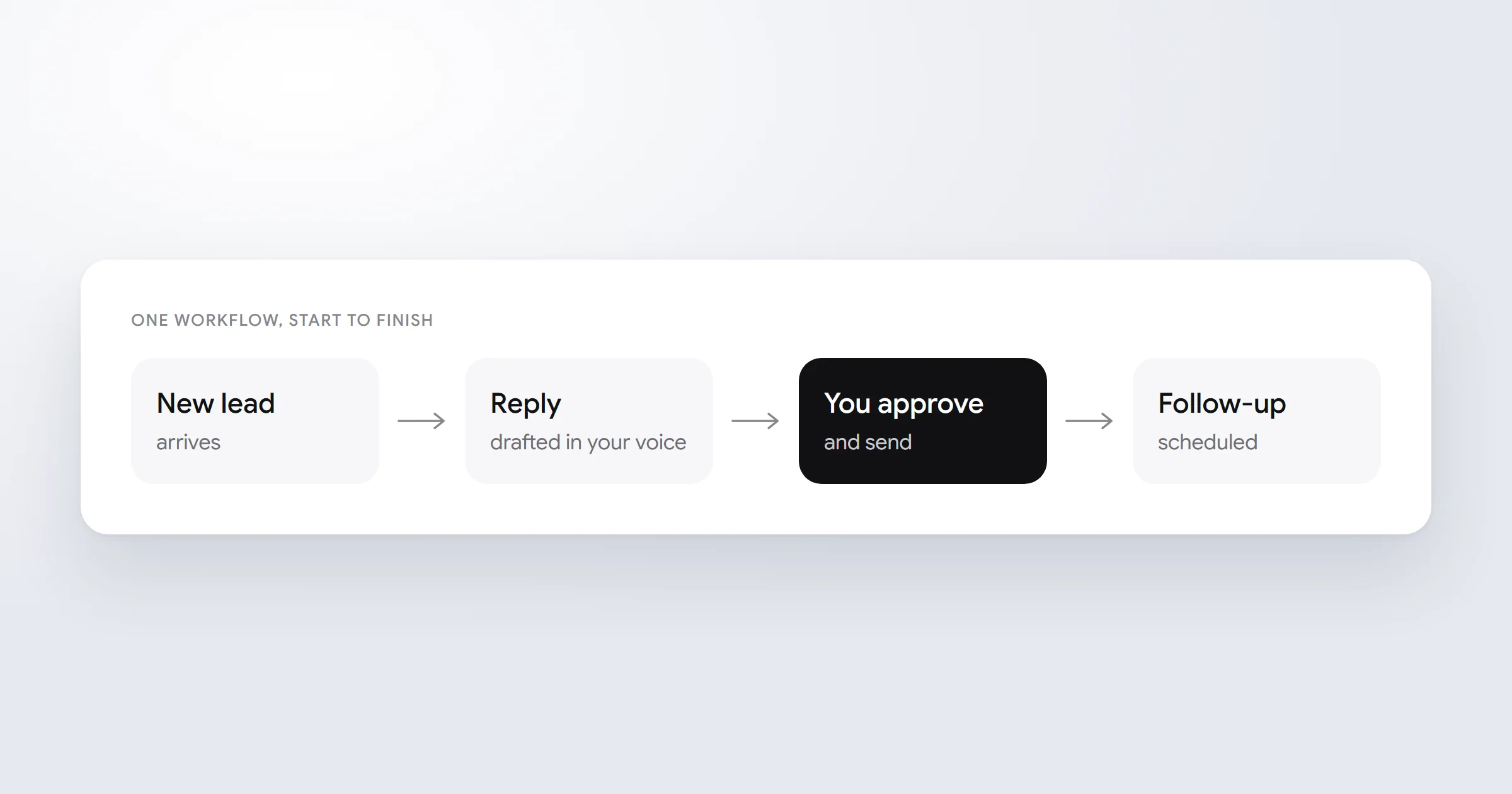
Stackenta builds workflow automation for small business owners. We write the workflow down first, then build it to run in the Claude or ChatGPT you already pay for, connected to your tools when they allow it, with drafts waiting for your approval. Isaac builds the AI side and has built enterprise SaaS platforms from scratch. Tools you can use yourself do much of this work too, so here is how to decide.
Should you build workflow automation yourself or hire someone?
Many people who work in this area say the line falls here. Doing it yourself with a tool like Zapier or Make works well for short, simple automations, such as “when this happens, do that, then send me a message.” Hiring help makes more sense when:
- the workflow has several branches or steps that depend on one another,
- it touches many different apps,
- an approval or judgment is part of it, or
- you have already built a few automations and they have started to tangle.
Some people call the tangled result “spaghetti workflows.” Mapping the process first is what prevents it.
What is a workflow, in a small business?
A repeating job with a clear start and finish. A new lead arrives and gets a reply, a quote goes out, a report is built every Monday, a post is published and a blog is written from it. If you do it more than once a week and it follows a pattern, it is probably a workflow.
How do we build them?
We write the workflow down: what starts it, what each step is, who or what does each step, and where a person decides. Then we build it to run on a schedule in the AI you already use. We connect it to the tools you work in when they allow it, and we tell you plainly when a tool doesn’t.
A real example is a daily call list. Micah built one for his own real estate business. Each morning it works out who to call today and why, from new leads, from people whose activity shows interest, and from follow-ups that have gone overdue. Instead of deciding from memory or a long list, he starts from a short list with a reason beside each name. We have since put together a version of this for an agent’s CRM.
A longer chain is Micah’s own content system. It researches topics in each content pillar, writes the scripts and post content, and after he films, schedules the posts, links them together and writes the blog post. It produces five short videos and one long video every week from about an hour and a half to two hours of his time.
What do you keep control of?
Your accounts and your data. You keep your content and data and can export it any time. Anything that goes to a customer starts as a draft, and you decide when a workflow can run without you.
How do you start?
With a short initial call booked on this site. If it’s a fit, we set up a free AI audit of about an hour, and a proposal follows about a week later. If you’d rather try a small workflow yourself first, we wrote about using ChatGPT for your business once you’re past brainstorming.
To talk through yours, book a call, or see how the build process works.