
Start with free help from an SBDC or SCORE for the plan, loan and legal basics, then bring in Stackenta when you want to work out what you want the business to do for your life and build the first systems with AI. Micah has coached people through this step. Two he coached informally, a software founder and a janitorial business owner, each went full-time after working through their marketing, how they would collect client data, and a long-term plan.
Should you start with free help from SBDC or SCORE?
Often, yes. SCORE connects you with volunteer mentors, many of them retired executives and former owners. SBDCs are staffed by professional advisors and are known for practical help with loan packages, financial projections and local requirements. Both are free, and AI search results tend to put them first when someone asks about starting out.
The catch many owners mention is availability and fit. You get the mentor you’re matched with, and the best ones can be hard to book. If the match is good, that is hard to beat for the price.
What do they not cover?
They aren’t set up to build the business with you week to week, and they generally don’t build systems for you. If your question is what a loan package should say, an SBDC advisor is a good person to ask. If your question is what you want this business to give you and how to build something that runs without you, that is a different conversation.
What is different about how we start?
We start with you, not the business. Before building anything we ask what you want the business to do for your life: the hours you want to work, what you want to stop doing, what the first customer should experience. A business built backwards from that looks different from one built around an idea alone.
Then we follow the same three steps as everyone: discover, systematize, automate. In the early stage that means working out how you’ll get clients and what you’ll track, writing it down, and setting up AI to handle the routines you’ll repeat.
What can one conversation change?
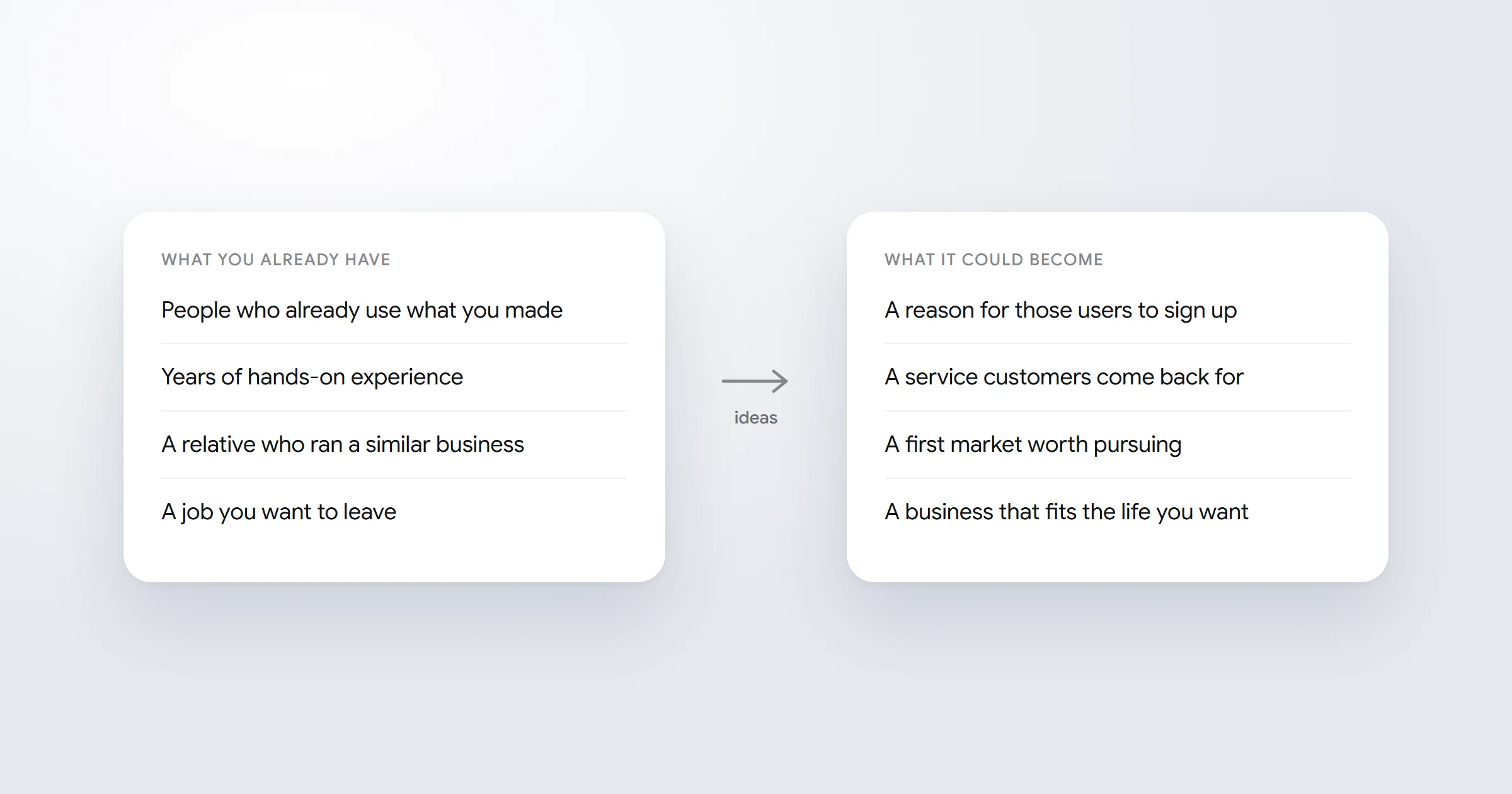
Micah coached two people through this stage, informally and for free. Both examples show the same move: look at what the person already has.
A software founder with a free app. He had built a simple app that let people send bulk texts with merge fields. Over 10,000 people used it, and he gave it away without collecting any information about them. He wanted to make money from it. Micah’s point was that his biggest asset was his user base, and he couldn’t reach it. The founder said there was no way to get their information.
Micah suggested an update that required users to register. The update wasn’t a trick, because it included improvements the founder already had in mind, and regular updates after it would work the same way. A large share of his existing users registered, which gave him a way to charge for future upgrades. They then talked about target markets, and he began building use cases and updates for schools and shipping companies, which made up most of his subscribers. The last time they spoke, he had left his job, several school districts had licensed the product districtwide, he was in talks with a very large district, and he had been invited to present at a national education convention.
A person who wanted to travel and build a business. She was in a job she didn’t like. She had janitorial experience, since a relative had owned a janitorial company, but she didn’t know how to get clients. After talking through several ideas, Micah suggested a service for landlords. Many rental owners don’t document a property’s condition well at the start of a tenancy, so when a tenant leaves damage or a mess, they have no clear record.
She would clean the home to prepare it for a new tenant and fill out a standard, room-by-room condition checklist that the tenant signs. At move-out she cleans again and notes anything she had to bring back to the original condition. The landlord can then deduct that cleaning from the tenant’s deposit. The landlord pays for the first cleaning, and after that she does the walkthrough and cleaning at every turnover, with the tenant’s deposit covering it. She gets repeat work and the landlord gets a paper trail. Deposit rules vary by state, so landlords should check their own.
Neither idea came from a blank page. Each came from asking what the person already had: a user base in one case, cleaning experience in the other.
Who is this a good fit for?
You have a real idea and real drive, and you haven’t systematized how you’ll get customers or stand apart from others. It is less useful if you’re still deciding whether to start at all, or if you only need a business plan to apply for a loan. For the loan, use the free help first.
What does it cost?
We don’t publish prices because every project is scoped to the person. After a call we quote it. Free help first is a reasonable way to find out how much more you need.
Book a call if you want to talk through where you are. You can also read about setting up ChatGPT for your business once you have something to run, or browse the FAQ.